Camping gas canisters are widely used across the UK for outdoor cooking, camping stoves, portable heaters and barbecues. However, once empty, many people are unsure how to dispose of them safely.
Most camping gas canisters contain butane, propane or a mixture of both. Even when they appear empty, residual flammable gas may remain inside, creating a potential fire or explosion risk.
Knowing how to dispose of camping gas canisters in the UK helps prevent accidents, protects waste collection workers and supports responsible recycling.
Can You Put Empty Camping Gas Canisters in Household Bins?
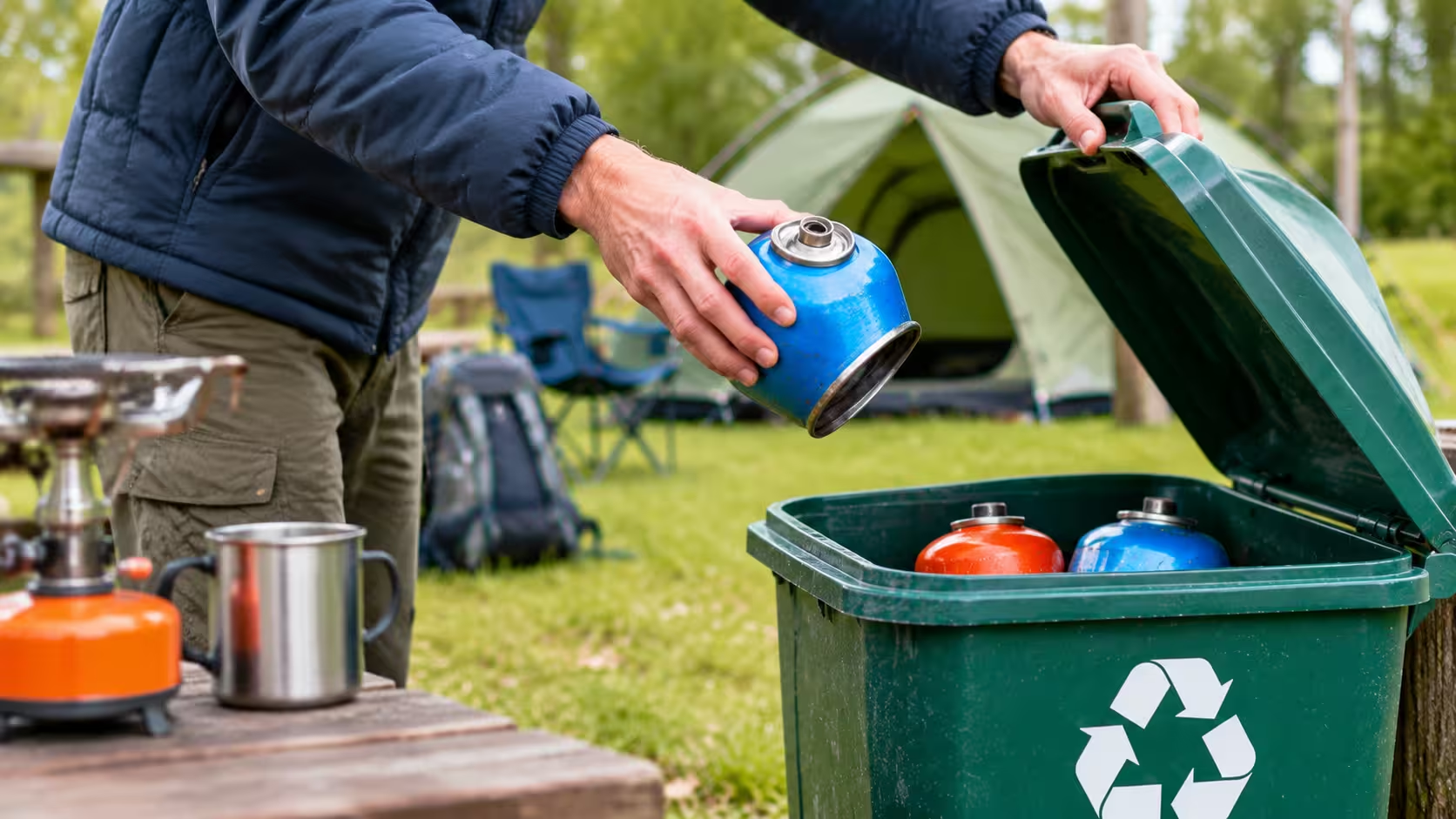
No. Camping gas canisters should not be placed in ordinary household rubbish or kerbside recycling bins, even when they appear completely empty.
During waste collection, pressurised containers can rupture when crushed inside rubbish lorries or recycling machinery.
To prevent accidents:
- Never puncture, crush or flatten gas canisters.
- Do not burn canisters or expose them to excessive heat.
- Avoid deliberately releasing leftover gas.
- Keep gas containers away from flames and ignition sources.
- Follow the manufacturer’s disposal instructions.
Understanding what waste cannot be recycled in the UK is equally important because certain household items require specialist disposal arrangements.
Where Can You Dispose of c in the UK?
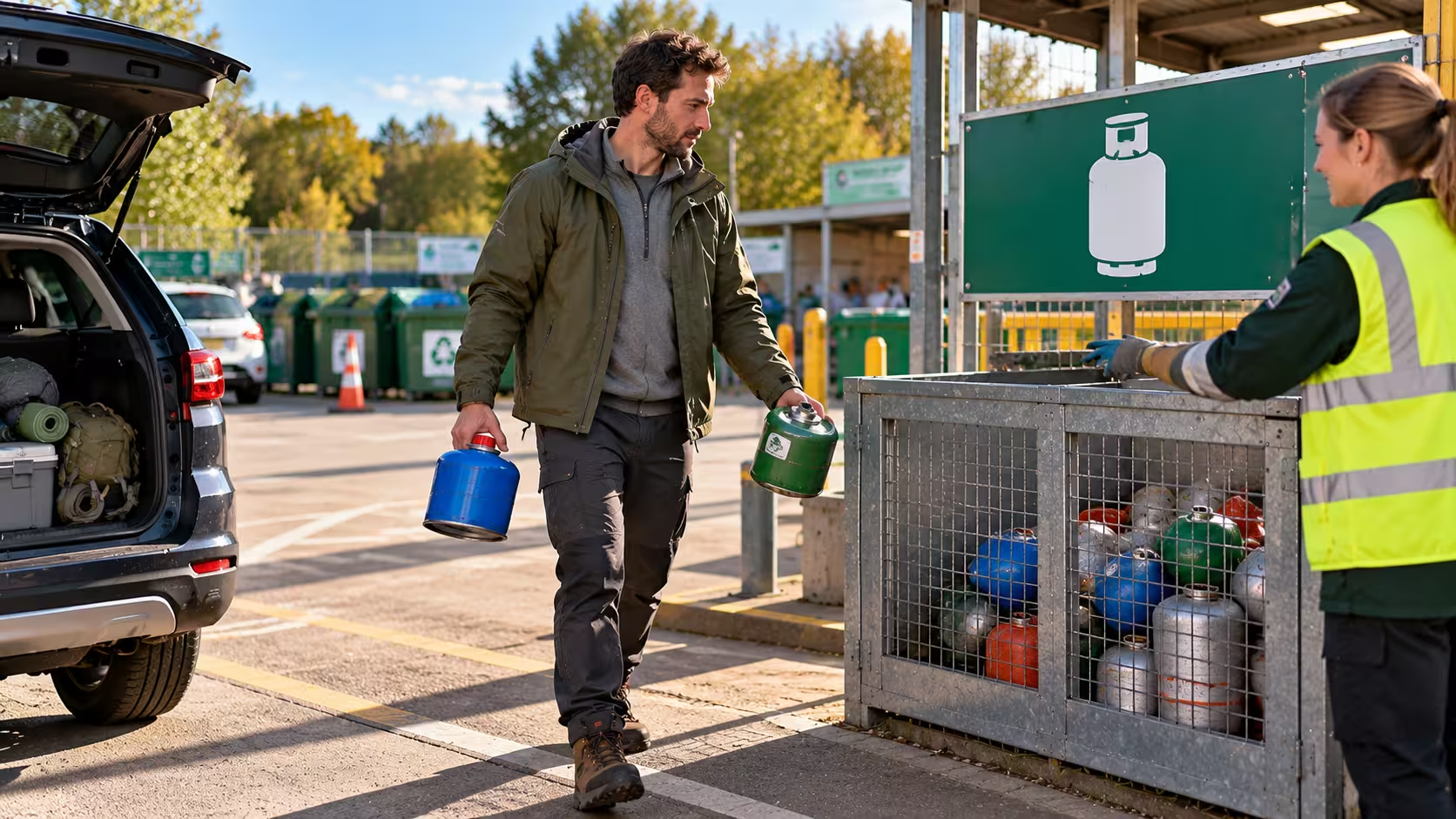
There are several appropriate disposal options, depending on the canister type and local council regulations.
1. Household Waste Recycling Centres
Many UK recycling centres accept camping gas canisters through dedicated collection facilities.
The North London Waste Authority accepts full and partially full gas canisters at specified recycling centres, including Summers Lane in Barnet and Regis Road in Camden.
Always confirm the centre’s acceptance rules before travelling.
2. Gas Suppliers and Retailers
Refillable gas cylinders should generally be returned to their original suppliers or participating retailers.
Some suppliers operate cylinder exchange or return schemes, helping reduce unnecessary waste.
3. Specialist Waste Disposal Services
Businesses, campsites and outdoor activity providers generating large quantities of camping gas waste should arrange collection through an appropriately authorised waste contractor.
Commercial gas canisters should not be mixed with ordinary business rubbish.
How Should You Store Camping Gas Canisters Before Disposal?
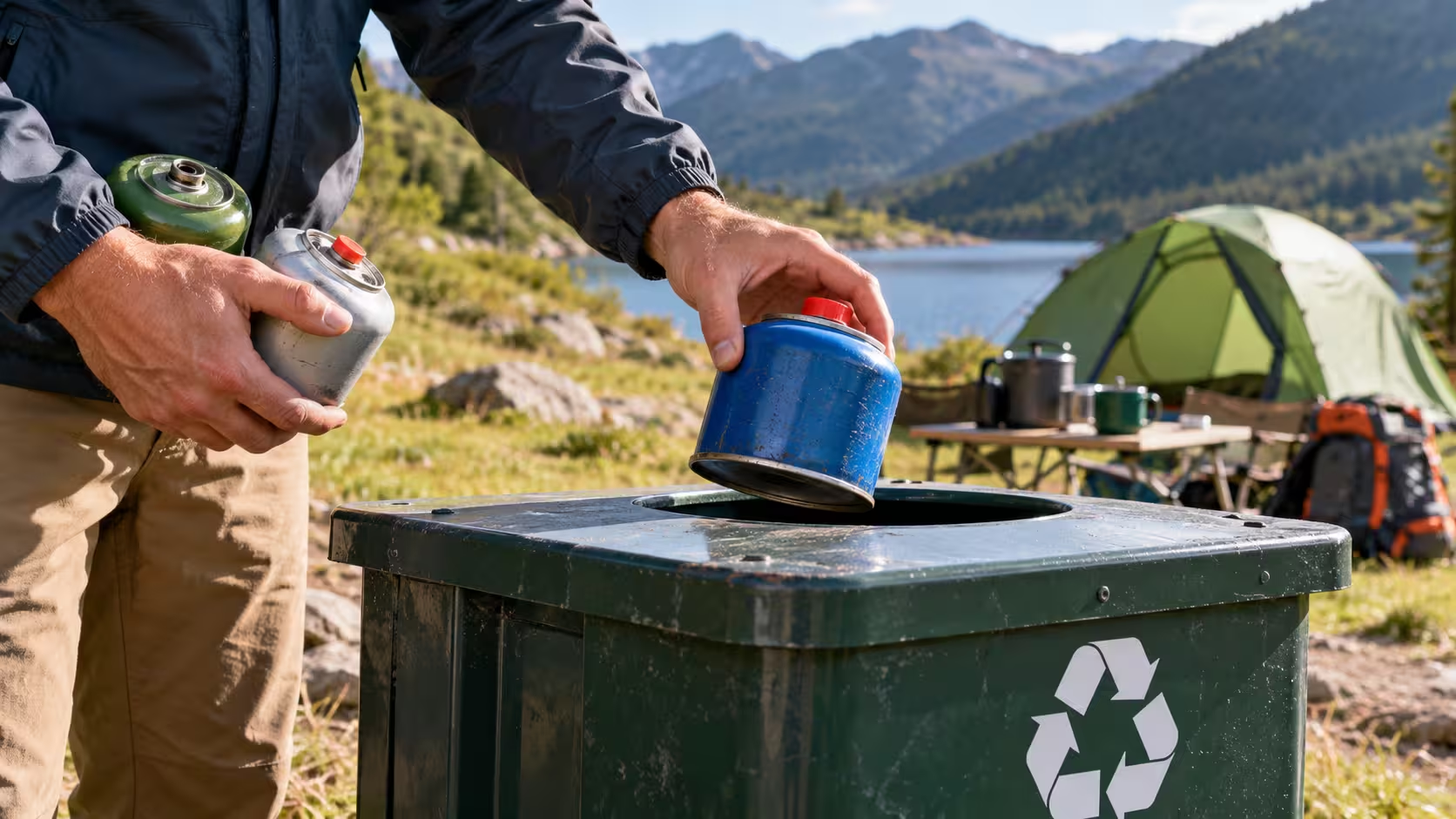
Safe storage is essential when preparing camping gas canisters for recycling or collection.
Keep containers upright where appropriate, in a cool, dry, well-ventilated location away from direct sunlight, heaters and open flames.
Leave valves and safety mechanisms intact. Never attempt to dismantle a canister or puncture it to remove remaining fuel.
If a container is damaged or leaking, avoid transporting it and seek advice from the supplier or an appropriate specialist.
Similar safety considerations apply when disposing of aerosol cans that are not empty, although the disposal rules may differ.
At Express Waste Removals, we encourage responsible waste separation across London. Our standard clearance services do not collect hazardous gas canisters, so these should be directed to suitable specialist facilities.
The safest approach is to return reusable cylinders to suppliers and take disposable camping gas canisters to an authorised recycling facility that accepts them.
Author Profile

- Stan is the CEO of Express Waste Removals and an experienced waste management professional, with expertise in rubbish clearance, responsible disposal and efficient waste solutions for homes and businesses across London.
Latest Entries
 Waste ClearanceNovember 2, 2026How to Dispose of Hearing Aid Batteries Safely in London?
 Waste ManagementOctober 26, 2026How to Dispose of Camping Gas Canisters in the UK Safely?
 Waste ClearanceOctober 22, 2026How to Dispose of Used Fireworks Safely in London After Bonfire Night?
 Waste ManagementOctober 20, 2026How to Dispose of Butane Cans Safely in London?