Wondering how to dispose of a kettle that has stopped working or needs replacing? You cannot simply throw it into your household rubbish bin. Electric kettles are classified as Waste Electrical and Electronic Equipment (WEEE), meaning they require separate recycling.
Whether your kettle is broken, outdated or no longer needed, several safe and environmentally friendly disposal options are available across the UK.
Can You Put an Old Kettle in the Bin?
No, electric kettles should not go into your general waste or household recycling bin. They contain materials such as metals, plastics and electrical components that require specialist recycling.
Incorrect disposal wastes valuable resources and can contribute to environmental pollution.
As with other kitchen appliances, kettles should be recycled through an authorised electrical waste collection facility.
The crossed-out wheelie bin symbol on your kettle indicates that it must be collected separately from ordinary household waste.
How to Dispose of a Kettle Responsibly?
There are several practical ways to get rid of an unwanted electric kettle without harming the environment.
1. Take It to a Recycling Centre
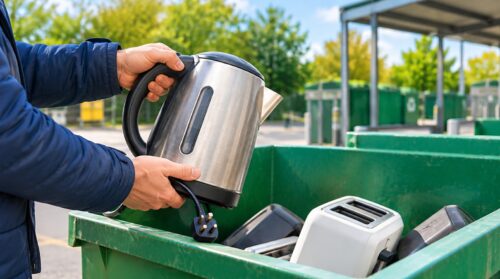
Your local household waste recycling centre is one of the easiest places to dispose of a broken kettle.
Most centres have dedicated electrical recycling containers where kettles, toasters and similar appliances can be deposited.
Check your council’s website for the nearest location, opening times and any booking requirements.
2. Return It to an Electrical Retailer
Under UK WEEE regulations, retailers must offer free like-for-like recycling when customers purchase a replacement electrical appliance.
For example, when purchasing a new kettle, you can return your old kettle through the retailer’s take-back service. Some larger stores also accept small electrical items without requiring a purchase.
3. Donate a Working Kettle
If your kettle still functions safely, consider donating it to a charity shop or giving it to someone who needs it.
Clean the kettle, remove limescale and check that the cable and plug are undamaged before offering it for reuse.
Donating functional appliances supports reuse and helps reduce waste.
4. Repair the Kettle
Sometimes, kettles stop working because of a faulty switch, damaged connection or accumulated limescale.
Before replacing yours, check whether professional repair is possible and economically worthwhile.
Never attempt electrical repairs yourself unless appropriately qualified.
5. Arrange Professional Waste Collection
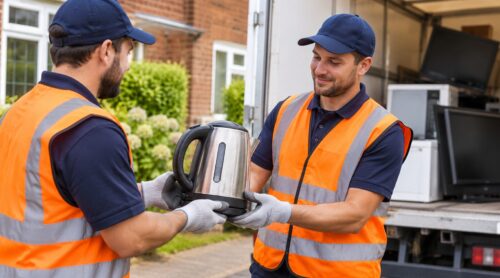
If you are clearing your kitchen or replacing several appliances, arranging professional waste removal can be convenient.
Our kitchen removal service helps London households dispose of unwanted kitchen items and appliances responsibly.
Before collection, confirm that your kettle and any other electrical equipment can be accepted.
How Should You Prepare a Kettle for Recycling?
Before taking your kettle to a recycling point:
- Unplug it and allow it to cool completely.
- Empty any remaining water.
- Keep its detachable electrical base with the kettle.
- Remove any easily removable batteries, if applicable, following recycling guidance.
- Avoid dismantling electrical components.
Proper preparation helps prevent contamination and supports safer recycling. You can also explore our recycling tips for handling other household waste.
Disposing of an old kettle correctly is straightforward. Whether you choose retailer take-back, recycling, repair or professional collection, responsible disposal helps recover useful materials and reduces unnecessary waste.
Author Profile

- Stan is the CEO of Express Waste Removals and an experienced waste management professional, with expertise in rubbish clearance, responsible disposal and efficient waste solutions for homes and businesses across London.
Latest Entries
 Waste ClearanceNovember 12, 2026How to Dispose of a Kettle Safely in the UK?
 Waste ClearanceNovember 2, 2026How to Dispose of Hearing Aid Batteries Safely in London?
 Waste ManagementOctober 26, 2026How to Dispose of Camping Gas Canisters in the UK Safely?
 Waste ClearanceOctober 22, 2026How to Dispose of Used Fireworks Safely in London After Bonfire Night?