Knowing how to dispose of wallpaper paste correctly is important after decorating a room or completing a larger home renovation. Although wallpaper adhesive may look harmless once mixed with water, pouring leftover paste straight into a sink or toilet is not usually a sensible disposal method.
Wallpaper paste can thicken, stick to pipework and contribute to drainage problems. Different adhesives may also contain different binders, preservatives or additives, which means disposal instructions can vary between products.
The safest approach is to check the product packaging first, deal with small quantities carefully and use an appropriate waste service for larger amounts.
How Do You Dispose of Wallpwaper Paste?
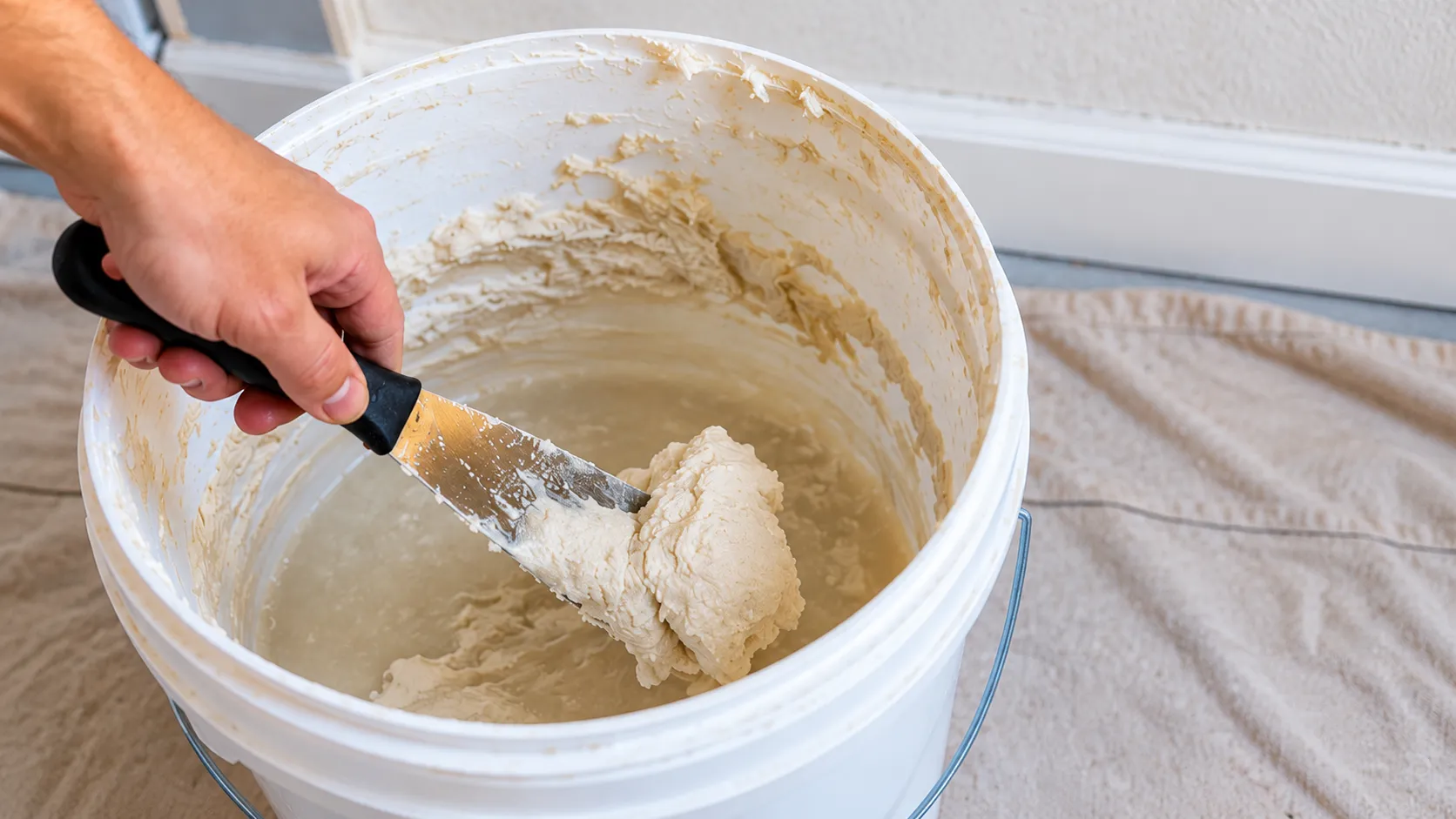
For a small amount of leftover wallpaper paste, start by checking the manufacturer’s instructions on the packet, tub or Safety Data Sheet.
If the product can be disposed of with normal household residual waste, it is generally better to allow the paste to dry or solidify first rather than placing liquid adhesive directly into the bin.
You can:
- Leave a small quantity in its container with the lid removed.
- Keep it somewhere secure and well ventilated, away from children and pets.
- Wait until the paste has hardened.
- Scrape out the dried residue.
- Place it securely in the appropriate household waste, subject to your local council’s rules.
Spreading a small quantity thinly over waste cardboard or newspaper may help it dry more quickly, provided the manufacturer’s disposal instructions allow this.
If you are carrying out a complete refurbishment, our guide to disposing of home renovation waste also explains how to deal with other materials created during DIY and renovation projects.
Can You Pour Wallpaper Paste Down the Sink?
It is best not to pour leftover wallpaper paste down the sink unless the manufacturer or relevant wastewater authority specifically confirms that the product can be disposed of this way.
Wallpaper adhesive is designed to bond to surfaces. Concentrated paste entering household plumbing can stick to pipes, combine with other debris or gradually contribute to a blockage.
Simply adding water to leftover paste does not automatically make it suitable for drain disposal.
The same precaution applies to toilets. Avoid assuming that flushing wallpaper paste is safe simply because the adhesive was originally mixed with water.
What About Ready-Mixed Wallpaper Paste?
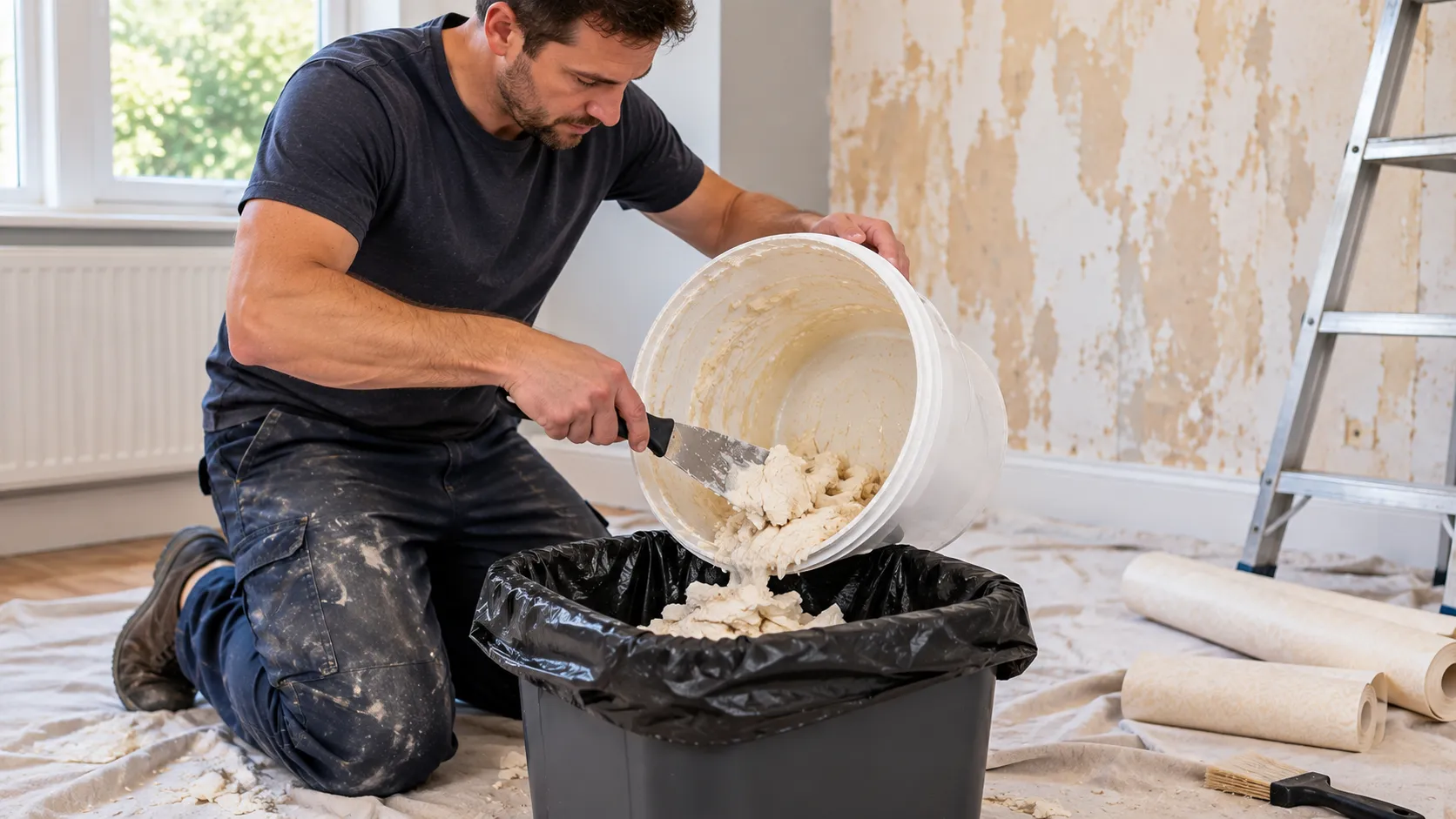
Ready-mixed wallpaper adhesive can contain different ingredients from traditional powdered paste.
If the paste is still usable, disposal may not be necessary at all. Clean the edge of the container, replace the lid securely and follow the manufacturer’s storage instructions. It may be possible to use the remaining adhesive for another decorating project.
If it has expired or is no longer required, check the container for disposal instructions. Small quantities may be allowed to dry completely before being placed in residual waste, but local rules and the manufacturer’s instructions should always take priority.
What Should You Do With Large Amounts of Wallpaper Paste?
A nearly full bucket of unwanted wallpaper adhesive should be treated differently from a small amount left at the bottom of a decorating tray.
Do not simply divide a large volume between several household bins.
Instead, check whether your local household waste recycling centre accepts adhesives or decorating waste. Requirements differ between councils, and some facilities may ask residents to book before arriving.
Professional waste collection can also be practical when the wallpaper paste is part of a larger renovation clearance involving stripped wallpaper, flooring, packaging, timber, broken fixtures and other unwanted materials.
Can Wallpaper Paste Be Recycled?
Wallpaper paste itself does not normally belong in conventional household recycling containers.
Putting liquid or dried adhesive into paper, plastic, glass or mixed recycling can contaminate recyclable materials.
The packaging may be different. An empty container could potentially be recyclable depending on the material, contamination level and local collection rules. Check your council’s recycling requirements before putting it into a recycling bin.
Decorating projects frequently create several different waste streams. For example, leftover paint needs separate consideration, so it is worth knowing how to dispose of old paint and cans rather than putting every decorating product into the same bin.
How Can You Reduce Wallpaper Paste Waste?
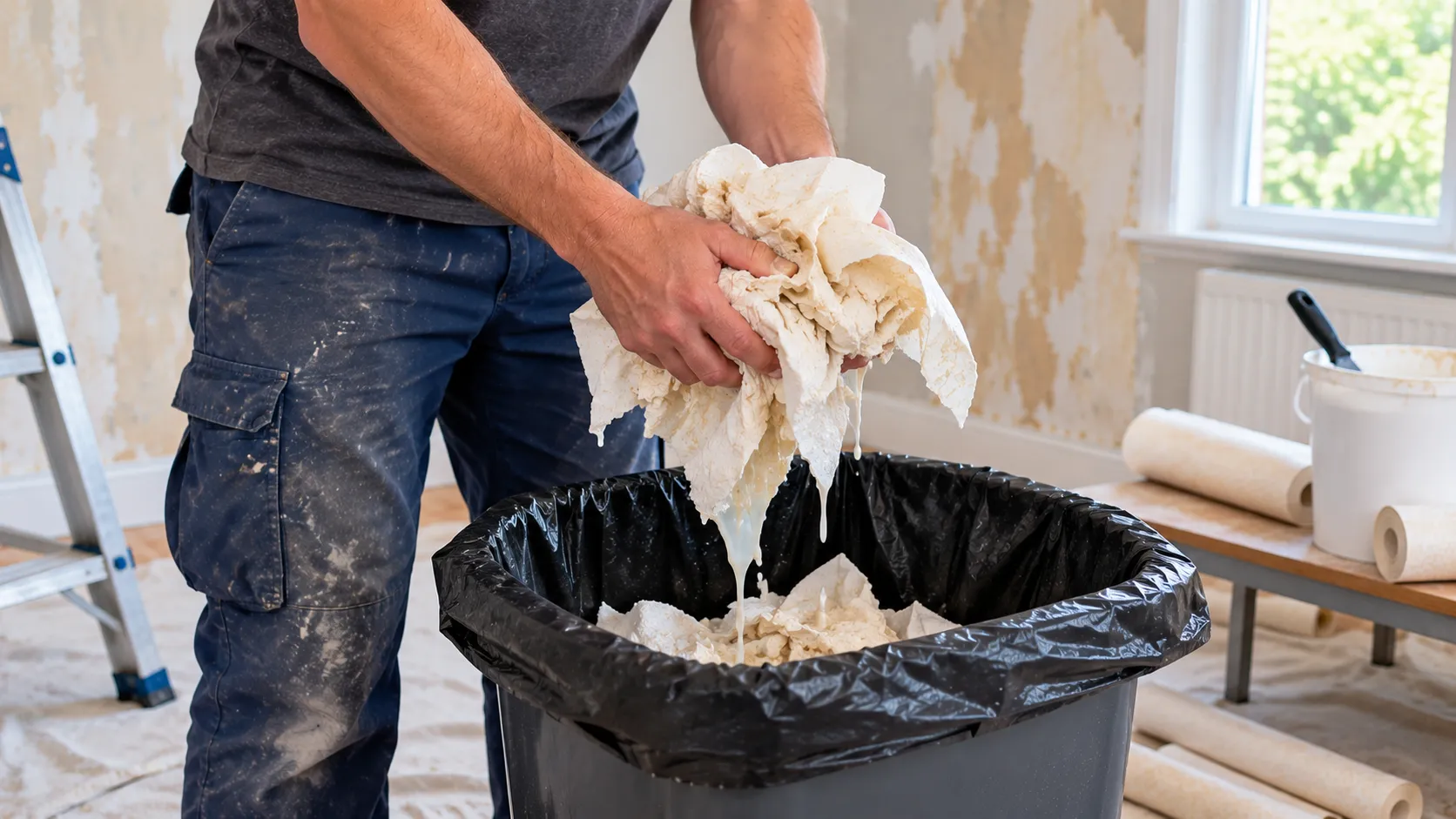
The easiest waste to manage is the waste you do not create.
Mix only the quantity of powdered paste you are likely to need. For ready-mixed adhesive, keep the container closed when it is not being used and store leftovers according to the manufacturer’s instructions.
Before throwing usable adhesive away, consider whether it could be kept for another room or offered to somebody carrying out a suitable decorating project.
Final Thoughts
The answer to how to dispose of wallpaper paste depends on the type of adhesive, the amount remaining and local waste rules.
For small quantities, check the product instructions and allow suitable adhesive to harden before disposal if permitted. Avoid pouring concentrated wallpaper paste into sinks or toilets, and check with your local authority or waste facility when dealing with larger quantities.
When wallpaper paste is only one part of a substantial decorating or refurbishment clearance, arranging responsible waste collection can make the entire clean-up much easier.
Author Profile

- Stan is the CEO of Express Waste Removals and an experienced waste management professional, with expertise in rubbish clearance, responsible disposal and efficient waste solutions for homes and businesses across London.
Latest Entries
 Waste ClearanceSeptember 26, 2026How to Dispose of Wallpaper Paste Safely in the UK?
 House ClearanceSeptember 19, 2026How to Reduce Waste at Home: 15 Practical Tips
 RecyclingSeptember 12, 2026What Waste Cannot Be Recycled in the UK?
 Waste ClearanceSeptember 2, 2026How to Dispose of Vuse Pods in the UK: Safe Recycling and Disposal Guide